
Our lecturers are hand-picked for their in-depth expertise and ability to convey their experiences to maximise the learning experience of our delegates. They also are friendly, approachable, and able to have a good laugh! The intensive, yet informal, atmosphere at the XML Summer School gives delegates the opportunity to pick the brains of our expert faculty, both during the classes and afterwards over a meal or in the bar.
Board
Dr John Chelsom

John Chelsom is CEO of Seven Informatics Ltd in the UK, an Adjunct Assistant Professor at the University of Victoria (Canada), a Visiting Professor at the National University for Water and Environmental Engineering in Rivne, Ukraine and an Honorary Associate of the Senior Common Room at St Edmunds Hall, Oxford. He trained as an electrical engineer before gaining a PhD in artificial intelligence in medicine. As Managing Director of CSW Group from 1993 to 2008, John was responsible for the implementation of XML workflow and production systems for many major organisations, including the British Medical Journal, Jaguar Cars and the Royal Pharmaceutical Society.
CSW later developed Case Notes – an electronic health records product, using XML and other open standards. In 2003 the UK government chose Case Notes as the primary clinical system in a national architecture for a shared electronic health record covering the 55 million citizens in England.
Since 2010 he has been the lead architect of the open source cityEHR product – an XRX (Xforms, REST, XQuery) health records system currently used in a number of hospitals in England and for Telemedicine data integration in Ukraine.
In 2000, John founded the XML Summer School and continues as a board member and lecturer in this annual event.
John teaches on the Hands-on Introduction to XML.
Naveed Dogar

Naveed Dogar completed her undergraduate degree in Biomedical Informatics at St. George’s Medical School where the focus of her dissertation was on Biometrics. She then went on to complete her Masters in Health Informatics at City University, London. The topic of her Masters dissertation was ‘Clinician-led Development of an Open Source EHR’, whereby a simple spreadsheet was used as a tool for clinicians to design and deploy their own enterprise-scale health records systems. After graduating, she continued her final project in collaboration with staff at Chelsea and Westminster Hospital in London, to deliver an EHR for the clubfoot clinic. She has worked as a clinical analyst on projects implementing open source EHR systems at Nottingham University Hospital and at the Nuffield Orthopaedic Centre in Oxford.
Naveed also teaches on the Applied Healthcare Informatics Program for Fordham University NY. Naveed is currently undertaking a DPhil at the University of Oxford, where her work focuses on the internationalisation of open source EHRs, combining her research studies with being a mother to two young boys. Her aspirations are to increase access to basic healthcare needs in developing countries.
Adam Retter

Adam has been the Director of Evolved Binary Ltd since 2014, where they specialise in software, consultancy, and training in information storage and retrieval. Their customers include large governmental organisations, publishers, universities, and one of the worlds largest social media companies. Adam also co-founded eXist Solutions GmbH, a software consultancy company in Germany. Adam has been instrumental in the development of the eXist-db Open Source Native XML Database since 2005, and has led its development since 2017. In 2024 Adam forked eXist-db, to create Elemental, an advanced replacement for eXist-db. eXist-db is used as the base for the cityEHR Open Source Electronic Health Records software. Recently, in 2024, Adam was appointed as a professor on the Applied Health Informatics program at Fordham University.
He is passionate about Open Source software, standards, and open technical communities, and is an invited expert on several international standards groups. Additionally Adam serves on board of several international conferences specialising in information markup. He is a recognised expert in several computer programming languages, and estimates that he has made contributions to over 50 Open Source projects. He has also published the reference book on eXist-db with O’Reilly and several papers that advanced the state of the art in information retrieval in the publishing and digital humanities domains.
When not travelling, Adam can be found snowboarding or hiking around the peaks on the Italian French border where he resides.
Adam is track chair and teaches on the Applied XML Technologies.
Jennifer Ramirez

Jennifer Ramirez holds undergraduate and master’s degrees in Health Information Science and specializes in scientific publishing, health technology, and structured content. Based in Germany, she is an XML/XSL Software Developer, working with open-source publishing pipelines for scientific and medical research using XML, XSLT, and related open technologies.
Before moving into scientific publishing, Jennifer contributed to healthcare integration projects internationally, including supporting the implementation of an EHR system at Aga Khan University Hospital in Nairobi, Kenya, and conducting epidemiological data analysis for patient health initiatives at the British Columbia Centre for Disease Control. She continues to be passionate about healthcare interoperability and has worked with standards such as ISO 13606 and HL7 CDA, as well as XML-based documentation and open-source projects including cityEHR.
When she’s not immersed in XML, Jennifer enjoys puzzle competitions, learning new languages, and painting.
Gary Cornelius

Gary Cornelius is a healthcare solutions specialist, technology consultant, and long-standing XML Summer School tutor with more than twenty-five years’ experience across software development, product engineering, and technical consultancy. His work has covered healthcare, media, government, retail, banking, professional services, and connected-device systems.Gary has taught practical XML courses at the XML Summer School for almost twenty years. His teaching is clear, supportive, and hands-on, helping participants build confidence as well as technical understanding. His sessions combine structured explanation, practical exercises, and careful guidance, so attendees can develop skills they can apply beyond the classroom.
Gary’s areas of expertise include XML technologies, document processing, information architecture, systems integration, Internet of Things, device HCI, networked services, embedded systems, electronic health records, and user-centred design.
Gary teaches on the Hands-on Introduction to XML.
Faculty
Geert Bormans

Geert is an information architect with 30 years of experience solving complex challenges for customers.
He works with structured data technologies such as XML and Linked Data, and has delivered successful projects in content migration, content management, and electronic publishing.
His expertise lies in designing foundational information architectures and models, particularly for technical documentation, legislative publishing, and the insurance industry.
Geert is also an active member of the markup technologies community, contributing to standards development and serving as a founding member of the Markup UK conference organizing committee
Ari Nordström

Ari Nordström is an independent content architect and SGML/XML expert with 30+ years of experience in single-source document management, migration and publishing, encompassing most XML standards in use today, from schema languages such as DITA, ATA and S1000D to technologies such as XSLT, XQuery, and XProc. He has provided solutions to many organisations and companies across a number of borders over the years, some of which deliver the rule of law, help dairy farmers make a living, and assist in servicing commercial aircraft. He is a frequent speaker at markup conferences and is a founding member of the Markup UK Organising Committee.
Ari is the proud owner and head projectionist of Western Sweden’s last functioning 35/70mm cinema, situated in his garage, which should explain why he once wrote a paper on automating commercial cinemas using XML.
Steven Pemberton

Steven Pemberton is a distinguished researcher in the fields of interaction, declarative programming, and web technologies, based at the Dutch national research centre CWI in Amsterdam. His university tutor was Dick Grimsdale, who built the world’s first transistorised computer, and who was himself a tutee of Alan Turing, ‘the father of AI’. After university, Pemberton — coincidentally — worked in Turing’s old department on the 5th computer in the line of computers Turing had worked on.
He co-designed the ABC programming language language that Python is based on, was the first user of the open internet in Europe when the CWI set it up in 1988, and has been involved with the web from its inception, co-designing several web standards, including HTML, CSS, XHTML, XForms, and RDFa. He now chairs the XForms and ixml groups at W3C. In 2022 he received the ACM SIGCHI Lifetime Practice Award, and in 2023 was named an ACM Distinguished Speaker. More details at http://www.cwi.nl/~steven
Sheila Thomson

Sheila Thomson is a software developer who has been working with XML technologies since the early 2000s, in domains such as online news and journal publishing, banking and manufacturing, for a variety of organisations but highlights include the BBC, Nature, LexisNexis, Sopra Steria and, most recently, Saxonica. She has a BA(Hons) in Information Studies and Librarianship and an MSc in Computer Science and is honoured to have been a member of a team that won a Webby Award. She is based in London and, when not developing, sings in a local community choir, chauffeurs Basset Hounds for a charity and takes deep dives down family history-related rabbit holes (such as shoemakers in 18th century Glasgow).
Rob Walpole
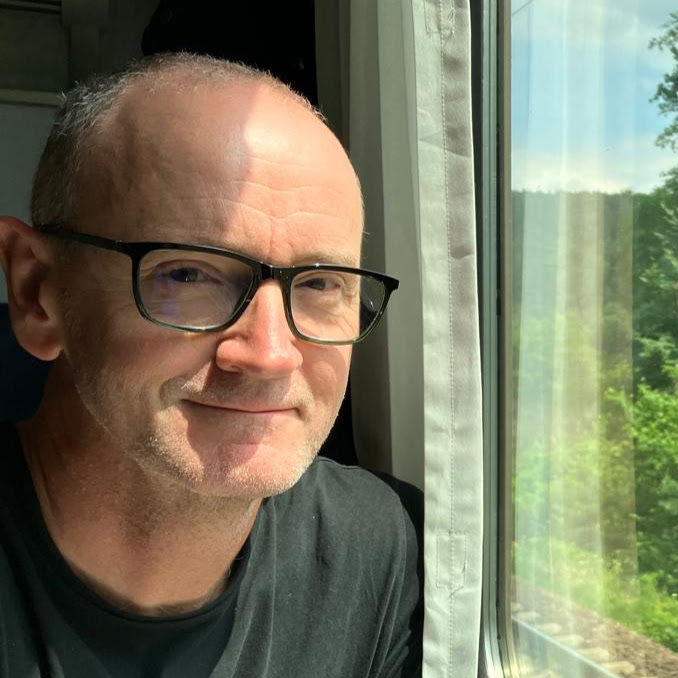
Rob Walpole is a Software Engineer and Data Architect with over twenty years’ experience of delivering critical, data-intensive applications for well-known government and business clients, including The Met Office, The National Archives, HMRC, British Airways and Rolls Royce.
Rob began his career as a Helpdesk Analyst at British Telecom, then transitioned to web development before specialising in Java, and later, Scala programming. He has been working with XML technologies and standards since 2006, when he first attended the XML Summer School as a student. In 2012 he pioneered the use of Linked Data and Semantic Web technologies at The Met Office to create an innovative public data service.
Rob’s expertise was later crucial to developing a Linked Data catalogue for digital records at The National Archives. Throughout his career, he has consistently championed projects that prioritise open standards and open-source principles. He has also shared his knowledge through papers presented at conferences such as XML Prague, Markup UK and the European Semantic Web Conference.
In his free time, Rob enjoys working on his Personal Knowledge Graph and exploring the hundreds of miles of coast path near his home in Cornwall.
Peter Winstanley

Peter started his working life as a clinical microbiologist with experience in clinical biochemistry, surgery and critical care. Following over 20 years in the Scottish civil service he moved fully into the commercial world working as an ontologist with Semantic Arts and more recently through Semantechs Consulting, his own bijou consulting firm, with Eccenca and the National Highways agency in England. On that journey he has also undertaken commercial work in the XML domain with the BBC, the European Commission and NATO. He enjoys sea kayaking, rides a BMW motorbike, and makes a good stab at playing the pipe organ.